
Hardwood
Can Water Damage Hardwood Floors and What to Do
Standing water is fast-acting on solid and engineered wood alike. Here is how water damages hardwood, what to do in the first 24 hours, and when to repair versus replace.
Quick Answer
Can water damage hardwood floors?
Yes. Water is hardwood's biggest threat, causing cupping, buckling, dark staining, and mold within 24 to 48 hours if it is not addressed. Shut off the water source, extract standing water immediately, remove wet rugs and furniture, run fans and a dehumidifier, and document the damage for insurance. A flooring professional can then measure moisture levels to determine whether the floor can be sanded and refinished or needs to be replaced.
Wood is porous, so it absorbs moisture from its surroundings continuously. Once liquid gets in, planks expand, warp, and pull away from the subfloor. What happens in the first 24 to 48 hours usually determines whether your hardwood floor can be saved through drying and sanding, or whether it needs to be replaced.
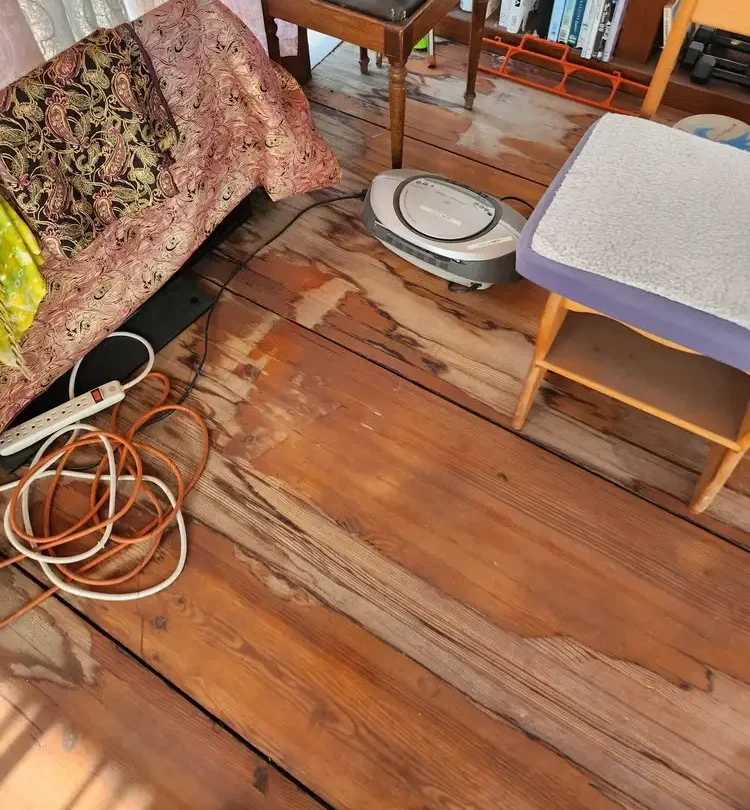
How Water Damages Hardwood Flooring
Wood fiber absorbs standing water through microscopic pores, which creates a few distinct patterns of damage depending on how the moisture moves through the plank.
- Cupping and crowning: Cupping happens when the underside of a plank absorbs more moisture than the top, so the edges rise higher than the center. Crowning is the opposite, when the center swells above the edges, often because the surface dried out before the core did.
- Buckling and lifting: This is the most severe reaction. When swelling wood runs out of expansion room at the room’s perimeter, planks separate from the subfloor and lift, sometimes several inches. Buckling signals serious subfloor saturation.
- Dark staining and discoloration: Water reacts with natural tannins in woods like oak, turning the grain dark gray or black. Damp conditions also invite mold, which can grow beneath the finish and stain the wood permanently.
Subfloor Damage and Mold Risk
The visible hardwood is only half the problem. Moisture travels through the tongue-and-groove joints and pools on the plywood or OSB subfloor underneath. According to the U.S. Environmental Protection Agency, indoor mold can begin growing on a wet surface within 24 to 48 hours. Left alone, that moisture rots structural joists and pushes mold spores into your indoor air.
Emergency Response Steps for Water-Damaged Floors
When water is actively sitting on your floor, every minute matters. Work through these steps in order.
- Stop the source: Shut off your home’s main water valve if the cause is a plumbing failure, or block the entry point if it is weather-related.
- Extract standing water immediately: Use a wet/dry vacuum, thick towels, and a squeegee. Do not wait for it to evaporate; every minute it sits, it works deeper into the wood joints.
- Remove wet rugs and furniture: Wet rugs and pads trap moisture against the finish and accelerate cupping, so lift them right away.
- Maximize airflow and dehumidify: Position fans across the floor and run a heavy-duty dehumidifier continuously. Keep windows closed if it is humid outside so the dehumidifier can keep up.
- Document everything: Photograph the affected area, water levels, and any damaged property before you move or remove anything, in case you need to file an insurance claim.
Dealing With Water-Damaged Floors?
Get a free, on-site moisture assessment before you decide between refinishing and replacement.
Can Water-Damaged Hardwood Floors Be Saved?
Whether a floor can be restored depends mainly on the type of water, how long it sat, and the type of wood.
| Factor | Usually Repairable | Usually Requires Replacement |
| Water type | Clean water (broken pipe, rain) | Black water (sewage, storm surge) |
| Exposure time | Under 24 hours | Over 72 hours of saturation |
| Wood type | Solid hardwood (can be sanded down) | Engineered wood (thin veneer delaminates) |
| Floor condition | Mild cupping, no subfloor rot | Extreme buckling, mold, or rotted joists |
Solid hardwood holds up well because it can be dried, re-nailed, and sanded down multiple times over its life. Engineered hardwood is more fragile in a flood, since prolonged exposure causes the plywood layers under its thin veneer to delaminate, which usually means replacement is the only real option.
Professional Restoration vs. Full Replacement
Trying to fix deep water damage without the right equipment can trap residual moisture beneath the finish, which all but guarantees a mold problem and long-term structural failure down the line.
Professional flooring techs use pinless moisture meters and infrared imaging to find pockets of trapped water beneath planks and baseboards that are invisible to the eye. Hardwood should generally sit between 6% and 9% equilibrium moisture content; readings well above that call for continuous commercial drying before any repair work begins.
If your solid hardwood has mild cupping but is still firmly anchored to the subfloor, it usually does not need to be replaced. Once the floor dries out fully, which can take a few weeks, our hardwood refinishing team can sand it flat and reseal it. If the damage is more severe, a targeted hardwood floor repair or a full hardwood floor replacement may be the more cost-effective path.
Protect Your Investment With My Flooring Expert
Water damage calls for fast action, accurate moisture readings, and skilled craftsmanship to bring your floors back. Whether you need an emergency assessment of cupped planks, expert sanding and refinishing, or a full replacement, My Flooring Expert connects you with top-rated local flooring technicians across Los Angeles. Contact us today to schedule an on-site evaluation and protect your home’s foundation.
Our Flooring Services
The full range of flooring services, available across Los Angeles.
Prefer to talk it through? Call (866) 429-4949 for a free consultation.