
Flooring Guide
Common Flooring Mistakes Homeowners Make And How to Avoid Them
The most expensive flooring mistakes happen before the first plank goes down. Here’s how to avoid the pitfalls we see most often.
Quick Answer
What are the most common flooring installation mistakes?
The costliest mistakes happen before the first plank is laid: skipping subfloor inspection and levelling, rushing the acclimation period, failing to moisture-test the subfloor, leaving no expansion gap around the perimeter, and poor layout planning that produces short end pieces and repeating patterns. Floors that buckle, gap or crack a few months after installation almost always trace back to one of these, not to defective material.
There is nothing quite like the feeling of stepping onto a brand-new floor. It completely transforms your home, updates your style, and increases your property value. But as a professional flooring installer who has spent years tearing out failed DIY projects and fixing subpar contractor work, I will tell you a hard truth: a floor is only as good as the preparation and technique behind it.
Too often, homeowners spend thousands of dollars on premium hardwood, luxury vinyl plank (LVP), or tile, only to watch it buckle, gap, or crack just a few months later. These issues rarely stem from defective materials; they are almost always the result of installation oversights.
If you are planning a renovation or dealing with a floor that already needs professional attention, understanding these critical pitfalls will save your sanity, your time, and your bank account.
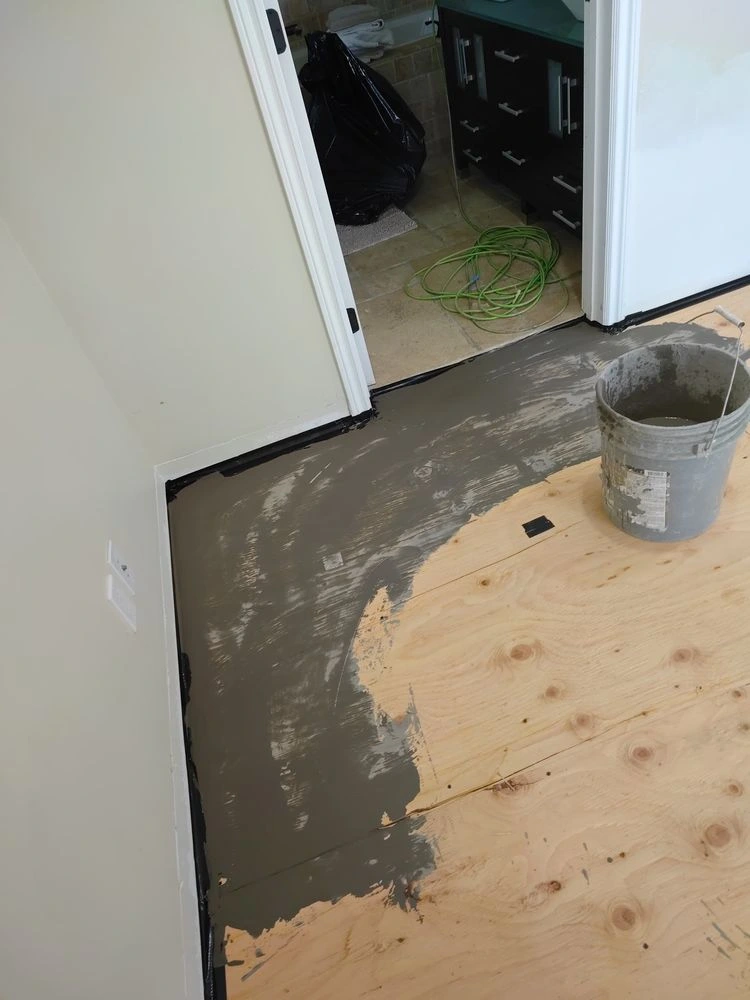
Skipping the Subfloor Inspection and Prep
If you take away only one piece of advice from this guide, let it be this: your new floor is entirely dependent on what lies beneath it.
Many homeowners believe that thick flooring materials will hide an uneven subfloor. They won’t. If your plywood or concrete subfloor has dips, ridges, or slopes, your new surface will eventually telegraph those imperfections. For click-lock floating floors like LVP or laminate, a bumpy subfloor causes the locking joints to flex every time you walk over them. Over time, those joints will break, leading to separation and annoying squeaks.
- The Fix: Before a single plank goes down, the subfloor must be clean, flat, and structurally sound. We use a straightedge to find high and low spots. High spots must be sanded down, and low spots must be filled with a high-quality self-leveling underlayment compound. If your existing subfloor is rotting or severely damaged, you need professional subfloor repair before proceeding.
Rushing Past the Acclimation Period
Wood and composite materials are natural, breathing products. They expand and contract based on the temperature and humidity of their environment. When flooring sits in a warehouse or a cold delivery truck, it adapts to that specific climate. If you bring it inside your house and nail or click it together immediately, it will adapt to your home’s climate after it’s installed.
If the material absorbs moisture from your home, it expands, causing the edges to push against each other and cup or buckle. If it dries out, it shrinks, leaving massive, ugly gaps across your room.
- The Fix: Hardwood, laminate, and even some rigid-core vinyl products need to acclimate inside the actual room where they will be installed. Stack the boxes flat, open the ends to let air circulate, and run your HVAC system at normal living conditions. Solid hardwood usually requires 5 to 7 days to acclimate, while engineered wood and LVP typically need 48 to 72 hours. Check the manufacturer’s specific guidelines—skipping this step completely voids your warranty.
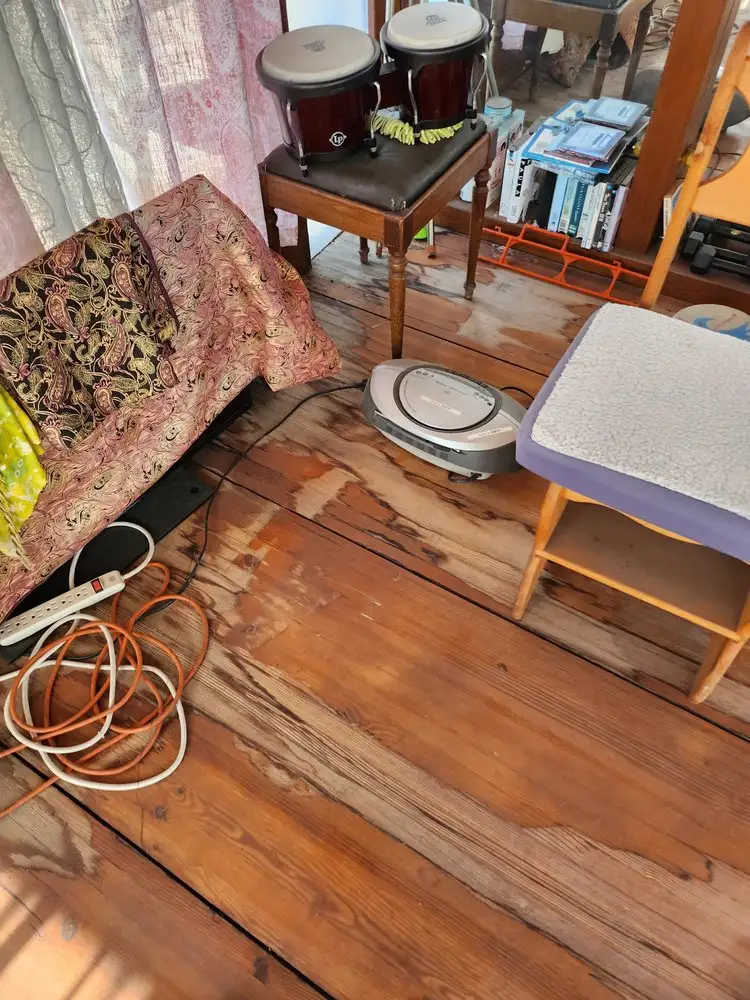
Ready to get your flooring done right the first time?
Get a free, no-obligation quote from My Flooring Expert. We bring the showroom to your door and handle everything from subfloor prep to the final board.
Ignoring Expansion Gaps Around the Perimeter
A floor needs room to breathe. Whether it is solid oak or floating luxury vinyl, the entire floor system shifts slightly with seasonal weather changes. A common amateur mistake is running the flooring tight up against drywall, baseboards, or door jams.
Without a safety valve, an expanding floor has nowhere to go but up. This creates unsightly peaks in the middle of your living room or causes planks to warp and separate from the subfloor.
- The Fix: Always leave an expansion gap around the entire perimeter of the room, typically between 1/4 inch and 1/2 inch, depending on the material. Don’t worry about how it looks during the install; this gap will be completely hidden once you install your baseboards or quarter-round molding. Just make sure you nail the molding into the wall, not into the flooring itself, so the floor can freely slide underneath it.
Failing to Test for Subfloor Moisture
Moisture is the ultimate enemy of flooring. This mistake happens constantly with installations over concrete slabs, such as in basements or ground-floor entryways. Concrete looks completely dry on the surface, but it acts like a sponge, drawing vapor up from the earth.
When you trap that moisture beneath a layer of wood or vinyl without a barrier, you create a breeding ground for mold, mildew, rot, and adhesive failure.
- The Fix: Professional installers always run a moisture test using a specialized meter before laying down materials. If you are installing a floating floor over concrete, you absolutely must lay down a 6-mil polyethylene vapor barrier first. For hardwood tile or glue-down installations, using the correct moisture-mitigating adhesive or underlayment is non-negotiable to protect your investment.
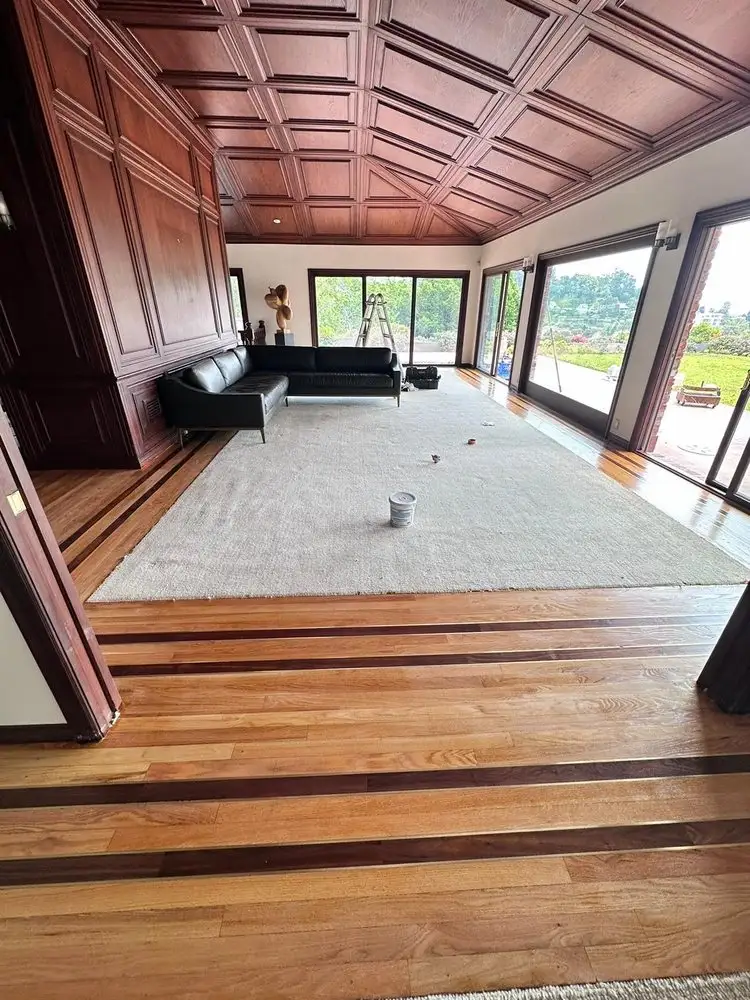
Poor Layout Planning and Visual Staggering
A beautiful floor has a natural, random flow. A rookie mistake is failing to plan the layout beforehand, which results in “H-joints” or “step-patterning.” This happens when the end joints of neighboring plank rows line up perfectly or mimic a staircase pattern. Not only does this look incredibly unnatural and distracting, but it also structurally weakens the entire interlocking floor system.
- The Fix: Before mixing glue or locking pieces together, unbox planks from 3 to 4 different boxes at once. This ensures natural color variations are blended smoothly across the room. Stagger your end joints by at least 6 to 8 inches from the previous row. Pay attention to your starting wall, too—measure the room carefully to ensure you don’t end up with a tiny, fragile 1-inch sliver of a plank on the opposite side of the room.
Get It Done Right with My Flooring Expert
Fixing a botched flooring job always costs significantly more than doing it right the first time. If you are noticing gaps, bouncing boards, or buckling in your current floors, you don’t necessarily have to replace everything—our team specializes in professional flooring repairs that can salvage your investment and restore your home’s beauty.
At My Flooring Expert, we handle the precise subfloor leveling, moisture testing, and technical layouts that guarantee a lifetime of durability. Whether you need a flawless new installation or a targeted repair to fix past mistakes, we bring old-school craftsmanship and expert precision to every square inch.
Don’t let installation errors ruin your home improvement goals. Contact My Flooring Expert today to schedule an inspection or book your professional flooring service!
Our Flooring Services
The full range of flooring services, available across Los Angeles.
Prefer to talk it through? Call (866) 429-4949 for a free consultation.